Using Octonous as a Product Manager
A look at how we use Octonous inside mozilla.ai to reduce the everyday overhead of product work, from turning Slack feedback into GitHub issues to staying on top of product changes and finding context across the tools where work already happens.

This is the first in a series on how the Octonous team uses Octonous in their day-to-day work. Each post comes from someone on the team, writing about their own role.
At mozilla.ai, we use Octonous every day. We're not just building the product. We use it to assist with our own work: planning, feedback loops, product discovery, debugging, and internal coordination.
As a Product Manager, my work spans many surfaces: Slack threads, GitHub issues, Notion docs, spreadsheets, user feedback, product specs, and team conversations. Octonous is very useful because it doesn't ask me to change where my work happens. It connects to those places and helps me move between them with less overhead.
Here are my favourite ways to use it day to day.
Turning Slack Threads Into Issues With an Emoji
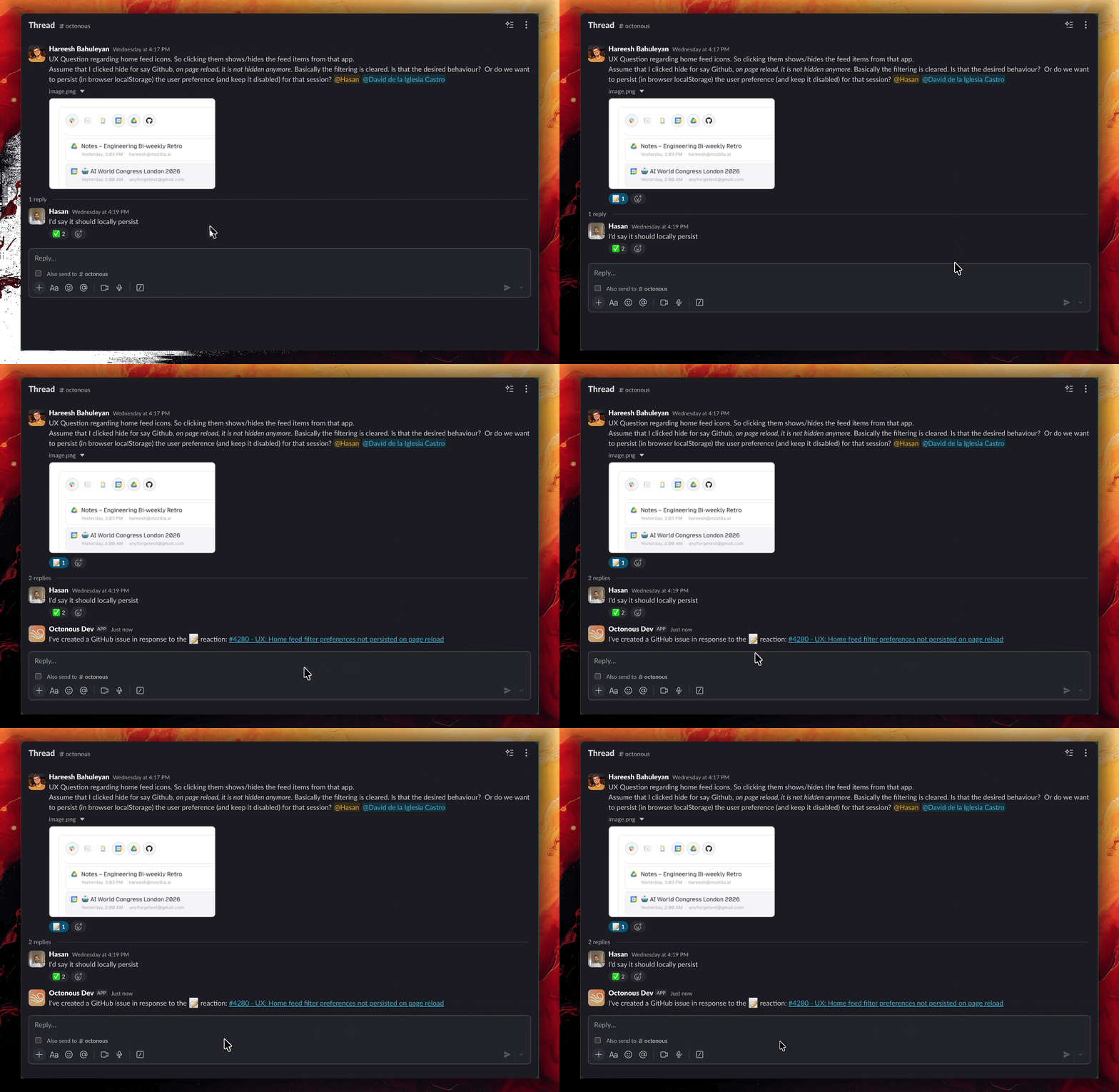
Our Slack channels get a lot of product feedback from internal usage: ideas, bug reports, rough observations, and quick questions from people using Octonous.
Turning that feedback into something actionable used to mean copying the message, reading the thread, deciding what context mattered, opening GitHub, writing a clear issue, and linking back. None of that is hard, but it's exactly the kind of repetitive product operations work that's easy to neglect.
So I set up an automation I can trigger by reacting to a Slack message with a specific emoji. The agent reads the message and surrounding thread, extracts the relevant context, and creates a GitHub issue with a clear summary, details, and links back to the source.
This changed how I handle feedback. I don't have to interrupt my work to file every issue manually, and I don't lose lightweight feedback just because it appeared in a fast-moving thread. I'll admit there's also something fun about triggering a genuinely useful action with an emoji. Now I get a little excited every time feedback shows up in the channel.
Getting Product-Focused PR Summaries
Another automation I created sends me a brief notification whenever a pull request is merged into the Octonous source code.
The notification summarises what changed, with an emphasis on the product impact. This is useful for me as a PM, but I think it is especially useful for anyone working on a product who wants to stay close to what the team is shipping without reading every PR in detail.
These updates live inside an Octonous chat, so if a summary mentions something I want to understand better, I can simply ask follow-up questions. Octonous already has the context of the change, so I can ask what changed, why it matters, whether it affects users, or whether it relates to a specific feature area.
Connected Search as a Single Place to Find Things
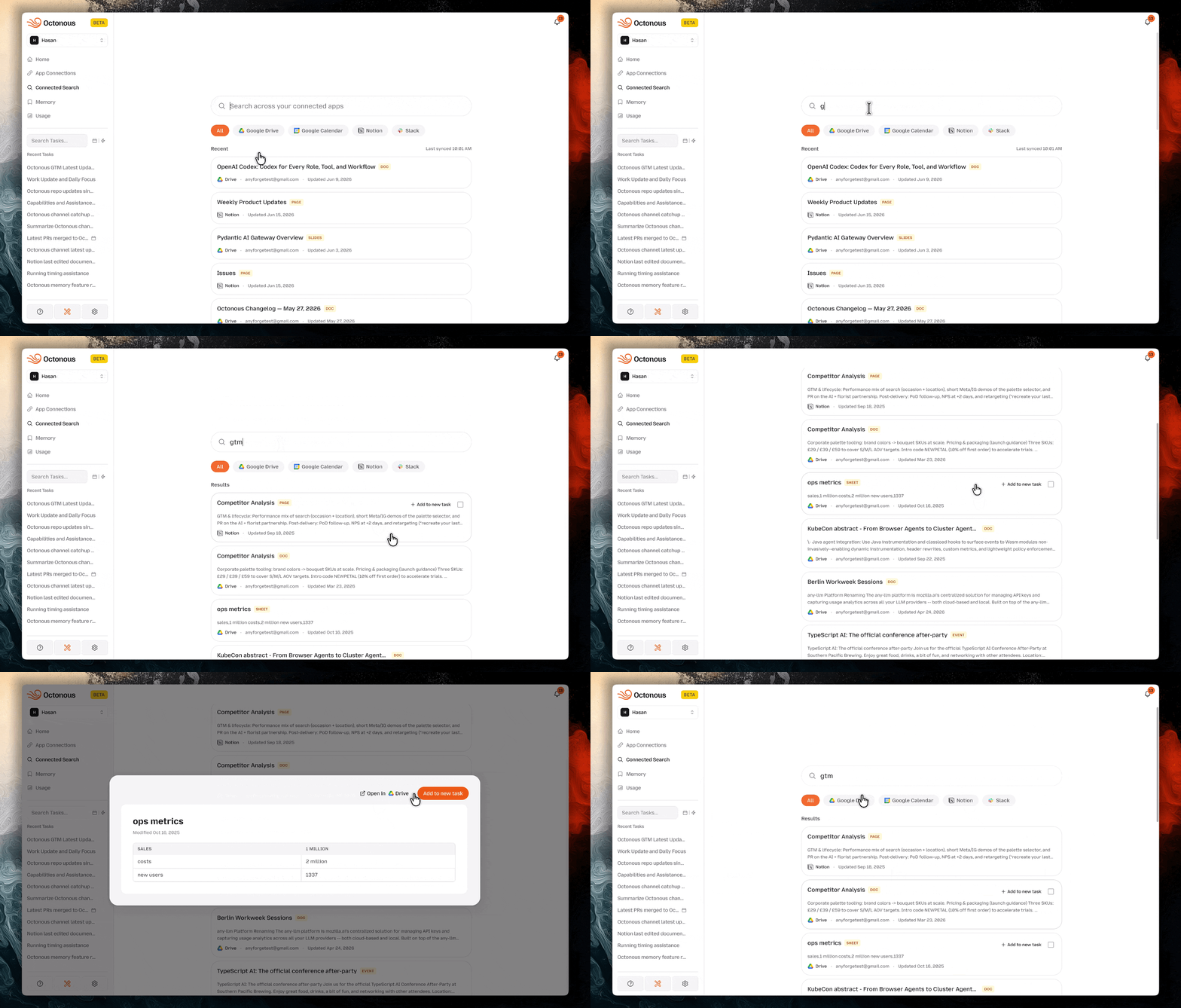
A large part of PM work is, unfortunately, remembering where things are: a decision buried in a Slack thread, a planning doc in Notion, a spreadsheet in Google Drive. Often, I know something exists but can't recall the exact title, where it was saved, or who shared it.
Now I use Octonous as one place to search across those systems. Instead of searching Slack, Notion, GitHub, and Drive separately, I type what I remember, like "onboarding flows for beta users," and Connected Search looks across my connected sources for relevant docs, pages, spreadsheets, or threads. That's much closer to how I actually remember work: by topic, project, or a phrase from the discussion rather than an exact title.
What's especially useful is that Octonous agents can use the same capability. An agent for product planning or issue triage can quickly search across connected sources and pull relevant context into the conversation.
Why This Matters for Product Work
The common thread isn't automation for its own sake. It's reducing the small frictions that slow product work down.
I don't want to spend my time copying Slack messages into GitHub, searching five systems for a forgotten document, or reconstructing what changed from technical PR descriptions. I want to stay close to users, understand what's being shipped, connect signals across tools, and turn messy information into clear next steps.
That's where Octonous has been most useful. It sits across the tools where work already happens, helps me build systems for repeated workflows, and gives me a way to search and act across our shared context.
We're still early and still learning from our own usage every day. But using Octonous internally has already changed how I manage feedback, research, product context, and product operations. The most valuable part is simple: it lets me spend less time on the overhead of product management and more time shipping the product.
You can try Octonous at octonous.com. New users receive 1,000 free credits when they sign up, with more available through onboarding.