Octonous Open Beta: What We've Learned and Where We're Going
The Octonous open beta is live. Learn what we discovered during closed beta, the workflow patterns users kept returning to, and the biggest improvements shipped since launch.
Expert Opinion
Sovereign AI shows up across nations, companies, communities, and individuals. This piece, based on a conversation with John Dickerson, CEO at Mozilla.ai, looks at control over AI systems, avoiding single points of failure, and building with modular, swappable components.
Technical Content
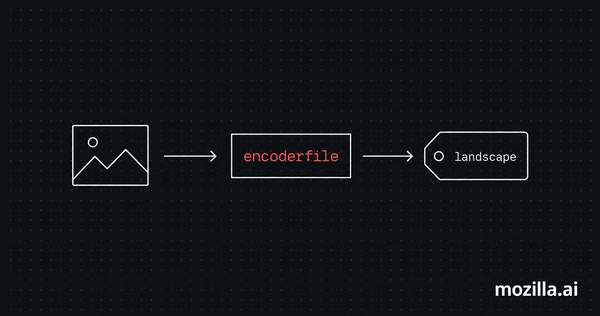
Encoder models power most NLP in production, but deploying them still means dragging along Python runtimes and dependencies. Encoderfile introduces a single executable with an appended payload and a format that can be inspected and understood.
Announcement
Running a small trade business includes a steady flow of admin work: quotes, scheduling, invoices, payments, and more. This post looks at how that workload builds up and introduces Clawbolt, a focused assistant designed around these everyday workflows.
Technical Content
When source code and distributed packages don’t match, risks increase. This breakdown of the LiteLLM incident shares what to watch for and how to reduce exposure.
Announcement
cq explores a Stack Overflow for agents, a shared commons where agents can query past learnings, contribute new knowledge, and avoid repeating the same mistakes in isolation.
Product Release
llamafile 0.10.0 unifies portability and modern model features. Bundle weights, run multimodal models, and access tool calling and Anthropic Messages API support, all from a single executable.
AI is changing product development. When building becomes effortless, the real constraint is no longer code. It’s clarity, product judgment, and knowing when the right decision is not to ship yet.
Mozilla.ai joins Flower Hub as a launch partner with fed-phish-guard, a federated phishing detection project. The classifier trains across distributed clients and shares only model updates, allowing collaborative learning without centralizing browsing data.
AI lets engineers generate thousands of lines of code in minutes. But humans still reason about systems slowly. That gap forces a rethink of ownership, reliability, and where safety really lives in modern software systems.
Subscribe to get the latest news and ideas from our team
The Star Chamber runs code reviews across multiple LLM providers and aggregates their feedback by consensus. Instead of relying on one model’s perspective, developers get a structured view of where models agree, disagree, and raise unique insights.
any-llm now integrates with JupyterLiteAI, LangChain, and Headroom. A single provider-agnostic layer powering notebooks, agents, and context optimization across OpenAI, Anthropic, Mistral, and local models.
Run any model, from any provider, like OpenAI, Claude, Mistral, or llamafile from one interface, now in Go. any-llm-go delivers type-safe provider abstraction, channel-based streaming, and normalized error handling across eight providers.
The newest integration with any-guardrail: Alinia AI, whose security models are specifically built to detect threats like prompt injection, data exfiltration, and policy violations by understanding the cultural and linguistic nuances of multilingual AI interactions.
A technical evaluation of multilingual, context-aware AI guardrails, analyzing how English and Farsi responses are scored under identical policies. The findings surface scoring gaps, reasoning issues, and consistency challenges in humanitarian deployments.
The State of AI report from OpenRouter and a16z offers valuable insight into API-based model usage. But many small models run locally on CPUs and consumer GPUs, outside managed services. This finding, however, warrants critical examination.
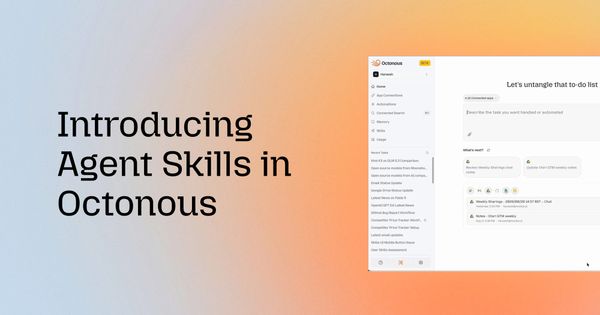
Octonous helps people stay in flow while work runs across connected apps. The assistant takes real actions, reads messages, updates tools, and creates items while showing every step and asking for approval before anything changes.
Remember early 2025? "Vibe coding" was a meme and seemed mostly a tool for casual builders or those new to coding. It's now 2026, and we find ourselves living in a new reality. Industry leaders like DHH, Karpathy, and Lutke are publicly embracing AI-generated code controlled by human prompting.
Secure, encrypted LLM API key management across OpenAI, Anthropic, Google providers. Track costs, set budgets, avoid vendor lock-in. Free beta access now.
The new plugin system transforms mcpd from a tool-server manager into an extensible enforcement and transformation layer—where authentication, validation, rate limiting, and custom logic live in one governed pipeline.
The year 2025 has been a busy one at Mozilla.ai. From hosting live demos and speaking at conferences, to releasing our latest open-source tools, we have made a lot of progress and more exploration this year.
Leverage the JVM's polyglot capabilities to create a self-contained, enterprise-optimized server-side blueprint that combines the performance benefits of WebAssembly with the reliability and maturity of Java's ecosystem.